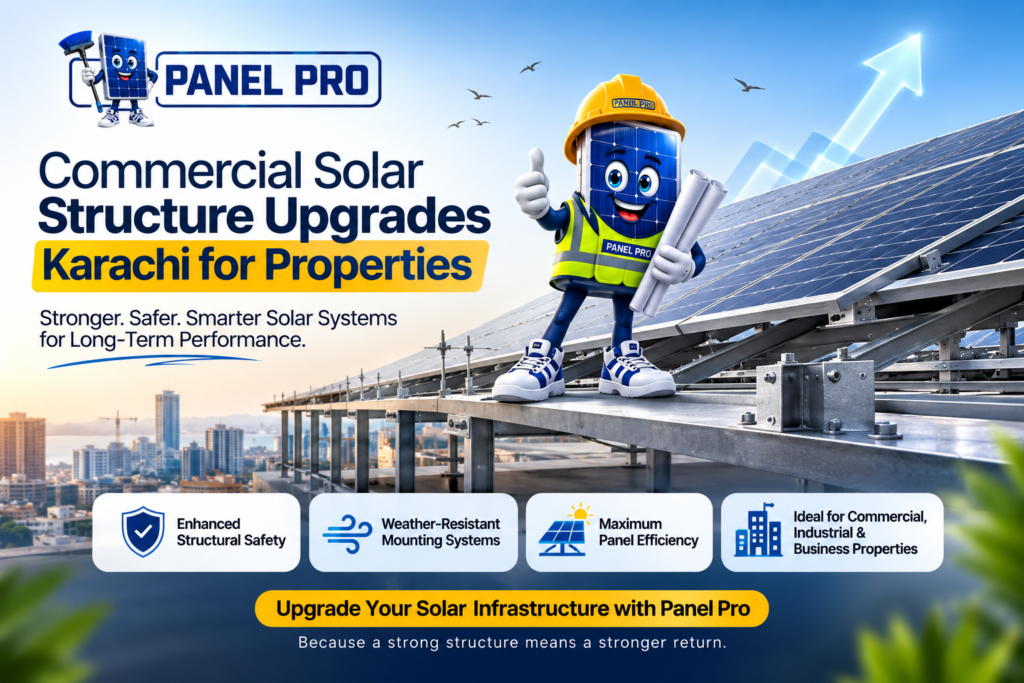
Proper commercial solar structure upgrades Karachi should strengthen the complete installation rather than replace only visibly damaged parts. Work may include structural assessment, corrosion control, improved bracing, new clamps, safer cable routes and better maintenance access.
Commercial solar systems are often expanded or modified as electricity requirements change. Extra panels may be added, equipment may be moved, and rooftop access can become restricted. Yet the original support frame isn’t always reviewed.
Why Existing Commercial Solar Structure Upgrades Karachi Needed
A mounting frame experiences panel weight, wind pressure, vibration, thermal movement and environmental exposure. Weak connections or undersized members may gradually create movement, panel misalignment and roof damage.
The US Department of Energy explains that photovoltaic arrays require stable, durable mounting capable of supporting modules while resisting wind, rain and corrosion over many years.
A planned solar mounting structure retrofit is especially important after adding panels, increasing frame height, installing rooftop equipment or modifying the building. Each change can alter load distribution.
Begin With a Structural Inspection for Commercial Solar Structure Upgrades
A professional solar structure inspection Karachi should examine:
- Roof type and supporting members
- Corrosion, coating failure and section loss
- Loose or unsuitable fasteners
- Bent rails and misaligned panel rows
- Cracked FRP or damaged aluminium
- Movement around anchors and base plates
- Blocked drains and standing water
- Unsupported cables
The inspection should separate cosmetic deterioration from defects affecting structural capacity. Painting over rust or tightening random bolts isn’t a technical repair.
Benefit 1: Better Wind Resistance
Commercial arrays may experience stronger wind pressures near roof edges, corners and parapets. Elevated frames face greater exposure because wind can act above and below the modules.
The Department of Energy’s severe-weather guidance highlights the importance of bracing, mechanical attachments and properly designed fastened joints. It also notes that vibration and joint loosening can contribute to failures.
A solar mounting structure retrofit may add diagonal braces, strengthen connections, replace weak clamps or improve load transfer into the building. Each new member should support a defined load path rather than simply adding weight.
Benefit 2: Improved Corrosion Control of Business Solar Structure Upgrades
Karachi’s humidity, coastal air, pollution and standing water can accelerate deterioration. Rust often develops around welds, cut edges, bolts and places where moisture collects.
A technical rooftop solar structure repair should replace materially weakened components before protective coatings are applied. Poor drainage, dissimilar-metal contact and unsuitable fasteners should also be corrected.
The Department of Energy recommends assessing corrosive agents and vulnerable components such as racking, fasteners, module frames, connectors and electrical enclosures.
FRP reduces conventional rust concerns, but its joints and bolts still need inspection. Aluminium resists ordinary rust, although deformation and galvanic interaction remain relevant.
Benefit 3: Safer System Expansion
Businesses often add panels as daytime loads increase. Before expansion, the existing roof and frame must be checked for additional dead load, uplift, panel dimensions and clamp requirements.
A complete commercial solar rehabilitation plan determines whether the structure should be reinforced, partly replaced or redesigned. New modules may have different dimensions and clamp zones, so old rails shouldn’t be reused without checking compatibility.
Expansion is also an opportunity to improve row spacing, cable routes and cleaning access. A layout that blocks drains or service paths can increase long-term costs.
Benefit 4: Better Roof Protection
Poorly sealed anchors, excessive ballast, movement around penetrations and blocked drainage can cause leakage or membrane damage.
During rooftop solar structure repair, technicians should document failed sealant, ponding water and damage around mounting bases. Roofing defects may require a specialist before structural work continues.
Owners should also consider the roof’s remaining service life. Replacing it soon after upgrading the array may require panels and mounting parts to be removed again.
Benefit 5: Easier Maintenance
Older installations are sometimes packed tightly across the roof. Technicians may have to step over rails or work near edges to reach inner rows.
Good commercial solar rehabilitation can introduce walking paths, improve clearance and reorganise cable supports. These changes make cleaning, inverter checks and roof repairs safer.
Repair or Replace?
Not every ageing frame needs complete replacement. Serviceable sections may remain when material condition, member sizes and connections are verified.
A targeted rooftop solar structure repair may suit limited corrosion, missing braces, damaged clamps or local waterproofing problems. Full replacement may be more sensible when there is widespread section loss, poor anchoring, major misalignment or an unsuitable original design.
The decision should compare repair cost, expected remaining life, disruption and expansion plans.
What an Commercial Solar Structure Upgrades Quotation Should Include
A professional quotation should identify:
- Existing defects and proposed corrections
- Material grades and profile dimensions
- Support and bracing arrangements
- Anchor, clamp and fastener specifications
- Corrosion-protection measures
- Waterproofing responsibilities
- Panel removal and reinstallation
- Testing and warranties
Property owners considering solar structure, inspection and maintenance solutions should request photographs, drawings and a bill of materials. The proposal should separate urgent safety work from performance improvements and optional expansion.
Plan Work Around Business Operations
A phased commercial solar rehabilitation plan can isolate work areas and reduce disruption. Panels and loose components should be secured during removal, while electrical isolation and rooftop access should be coordinated before work begins.
Final handover documents should record completed changes and future inspection requirements.
Final Thoughts
Effective commercial solar structure upgrades Karachi improve wind resistance, corrosion control, roof protection and maintenance access. They also create a safer foundation for adding panels or replacing ageing modules.
A documented solar structure inspection Karachi should come first, followed by a technically defined solar mounting structure retrofit or replacement plan. Commercial owners who treat the frame as long-term infrastructure can better protect their rooftop and solar investment.
FAQs
Only after the roof, supports, anchors, bracing and panel compatibility have been checked. Empty roof space doesn’t automatically mean spare structural capacity.
Surface corrosion may be treatable, but serious section loss requires replacement. Coating shouldn’t hide unresolved damage.
Yes, when profiles, joints, anchors or fasteners are damaged or the panel layout changes. FRP doesn’t rust like steel, but it isn’t maintenance-free.
The interval depends on system age, environment, structure type and previous defects. Extra checks are sensible after strong winds, roof repairs or system expansion.