
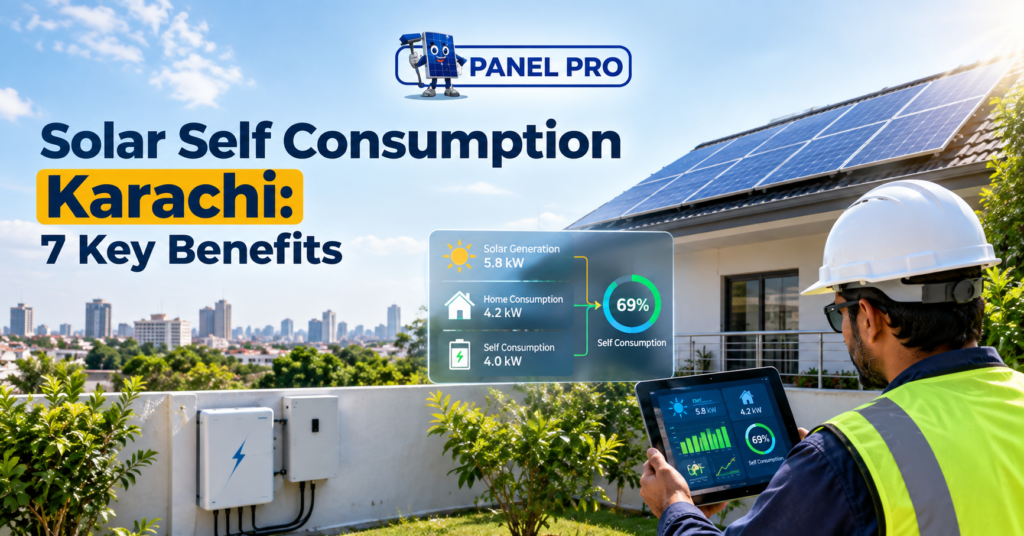
Karachi’s rooftop solar market is entering a different phase. For years, many system owners focused heavily on how much electricity their panels could send back to the grid. In 2026, that calculation is changing. With new prosumer regulations replacing net metering for new installations, the value of using solar electricity directly during the day has become much more important. K-Electric confirms that new solar customers now fall under the 2026 Prosumer Regulations, while existing customers can continue under their previous arrangements until their agreements expire. As a result, solar self consumption Karachi has become a practical consideration for homeowners, offices, shops, schools, warehouses, and other properties with rooftop systems.
The objective goes beyond simply generating more electricity. Property owners also need to use more of the electricity their solar systems produce during daylight hours.
Why Solar Self-Consumption Matters More in 2026
The economics of rooftop solar are changing.
Under the previous net-metering model, exporting surplus electricity could play a major role in reducing electricity costs. The 2026 framework has changed that structure, making daytime consumption increasingly important for new solar users.
This makes solar self consumption Karachi relevant even for properties that already have functioning solar systems. A system can produce plenty of electricity, but if the building has little demand during peak solar production hours, the owner may not receive the same value from that generation.
The focus therefore shifts toward three key factors:
- when electricity is generated
- when electricity is consumed
- how efficiently the solar system performs
This is where solar energy monitoring Karachi becomes valuable.
1. Understand Your Daytime Electricity Pattern
The first step toward better solar self consumption Karachi is understanding when your property actually uses electricity.
For example, an office may have its highest demand between 9 a.m. and 5 p.m. That schedule naturally matches solar production. Residential properties often have lower daytime consumption because family members may be away at work or school.
In that situation, homeowners can schedule suitable loads such as water pumps, washing machines, and other appliances during daylight hours. Businesses can also move selected energy-intensive activities into periods when their solar systems produce the most electricity.
Without monitoring, these patterns are easy to miss. Solar energy monitoring Karachi gives property owners a clearer view of generation and consumption instead of relying only on their monthly electricity bills.
2. Keep the Solar System Producing Properly
Self-consumption only works when the solar system produces electricity efficiently.
Dust, bird droppings, construction particles, salt deposits, and other environmental residue can reduce the amount of sunlight reaching the module surface. Karachi’s coastal environment makes surface contamination particularly relevant.
For this reason, solar maintenance Karachi should become part of regular system management rather than something owners consider only after a visible problem appears.
Regular maintenance helps identify dirty modules, damaged components, loose connections, abnormal inverter behavior, and other issues that can affect generation.
A clean and properly maintained system gives the building more usable solar electricity during productive daylight hours.
3. Monitor Performance Instead of Guessing
One common mistake solar owners make is judging system performance simply by looking at the panels.
Even when a panel looks clean, the overall system may still produce less electricity than expected. Solar energy monitoring Karachi can help owners compare actual production with expected output and identify unusual changes.
For instance, electricity generation may suddenly decline despite similar weather conditions. Such a change can signal a problem that requires further inspection.
Monitoring becomes especially useful for larger commercial systems. Even a relatively small decline in performance can accumulate into meaningful energy losses over time.
4. Improve the Value of Daytime Generation
Better solar self consumption Karachi isn’t necessarily about installing more panels. In many cases, the opportunity lies in using existing solar generation more intelligently.
Businesses can shift certain electricity-intensive activities into daylight hours. Commercial buildings can coordinate HVAC operation with periods of strong solar production. At home, suitable appliances can run while the system is generating electricity.
The principle is straightforward:
Use solar electricity when your panels are producing it.
This approach becomes particularly important as consumers evaluate solar systems according to actual daytime energy needs rather than simply choosing the largest possible system.
5. Make Maintenance Part of Energy Management
Traditional maintenance often focuses on fixing equipment after something stops working. Solar systems benefit from a more preventive approach.
With solar maintenance Karachi, owners can plan inspections around system performance, environmental conditions, and observed abnormalities.
Karachi’s combination of dust, heat, humidity, coastal air, and seasonal weather means rooftop equipment operates in demanding outdoor conditions. A practical maintenance program can therefore include cleaning assessments, visual inspections, electrical checks, performance reviews, and early identification of potential faults.
For a solar owner trying to maximize solar self consumption Karachi, maintaining generation capacity directly supports the amount of usable electricity the system can provide.
6. Use Performance Data to Find Hidden Losses
A modern solar system produces more than electricity. Its performance data can also provide useful information about how well the system operates.
Property owners can evaluate solar performance Karachi through production trends, inverter information, historical generation, and changes in output.
Suppose production gradually declines over several weeks. Several factors could explain the change, including surface contamination, shading, equipment problems, wiring issues, environmental conditions, or another technical fault.
Without performance records, the decline may go unnoticed. Regular analysis gives owners a better chance to investigate problems before small performance issues become larger energy losses.
Performance data can also help owners understand whether maintenance activities are improving system output over time.
7. Think Beyond Installation
The solar industry in Karachi is moving toward a more operational mindset.
Installing panels is only one stage of a system’s useful life. The next challenge involves keeping the system productive and making the electricity it generates more valuable.
That means solar performance Karachi should be considered alongside cleaning, inspection, monitoring, and preventive maintenance.
Pakistan’s distributed solar market has expanded rapidly, with the government reporting more than 12 GW of off-grid solar and over 6 GW of net-metered solar capacity by the end of 2025.
As the installed base grows, the question is increasingly shifting from “Should I install solar?” to “How do I get the most useful energy from the system I already have?”
How Panel Pro Supports Better Solar Performance
Panel Pro approaches solar care around the practical needs of operating systems in Karachi.
For property owners, this means looking beyond occasional cleaning. Professional service helps identify conditions that may reduce production and keeps the system operating as intended.
A stronger maintenance approach combines cleaning, inspection, performance observation, and preventive attention.
For businesses in particular, this approach can help turn solar from a passive rooftop installation into a better-managed energy asset. Regular attention can also help owners identify performance changes before they become more significant operational concerns.
The Karachi Solar Mindset Is Changing
The new economics of rooftop solar make solar self consumption Karachi more relevant than ever.
Instead of thinking only about how much electricity panels generate, owners should also consider how much of that electricity actually benefits the property.
Achieving that requires attention to consumption timing, system cleanliness, maintenance, and performance data.
Solar energy monitoring Karachi can reveal important consumption and generation patterns.
Solar maintenance Karachi can help protect operating performance.
Solar performance Karachi can help identify unexplained changes.
Together, these practices support a more practical approach to rooftop solar—one focused not merely on generation, but on getting meaningful value from every unit of electricity produced.
FAQs
Yes. Changes to Pakistan’s 2026 prosumer framework have made direct daytime consumption more important for new solar users, particularly because surplus electricity is treated differently from the previous net-metering model.
Cleaning can help maintain the system’s ability to generate electricity by removing surface contamination that blocks sunlight. The actual improvement depends on the site’s environmental conditions and the amount of accumulated soiling.
Monitoring helps owners understand generation patterns and identify unusual changes in output. It can be particularly useful for commercial properties where small performance losses can accumulate over time.
Routine professional attention can be useful for identifying issues that aren’t obvious from the ground, particularly on larger or difficult-to-access installations. Maintenance requirements depend on system size, environment, equipment, and operating conditions.