
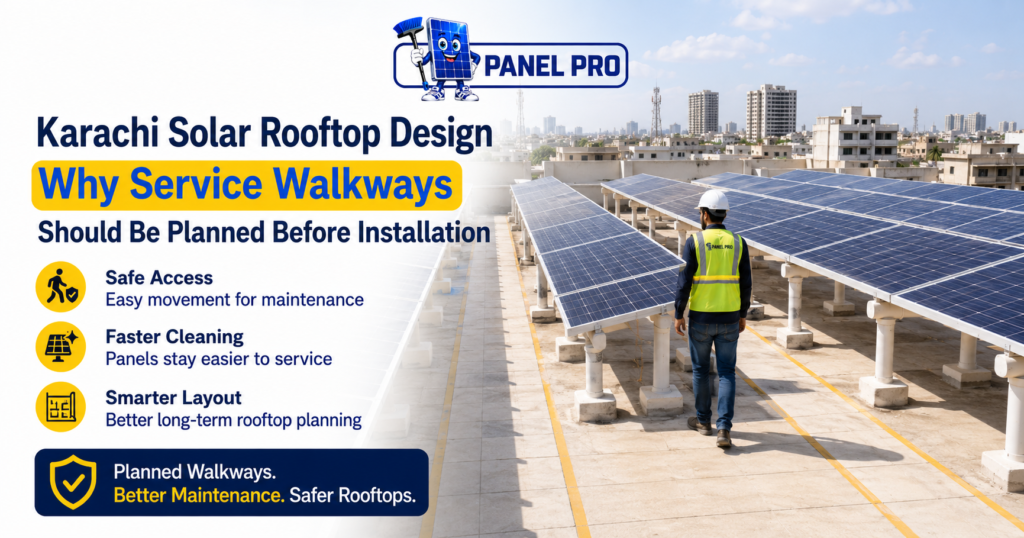
Karachi rooftops are carrying larger solar arrays, but maximum panel coverage is not always the best layout. When modules are installed edge to edge, technicians may struggle to reach wiring, clamps, drains, or rear rows. Proper Karachi solar service access should therefore be designed before the mounting frame is fabricated.
A well-planned layout combines module placement, an FRP solar structure, safe movement routes, cable clearance, and future cleaning needs. Good solar maintenance access helps technicians inspect the system without stepping between tightly packed modules, while thoughtful solar panel installation reduces the need to remove panels simply to reach another component.
Why Service Space Belongs in the Original Layout
A rooftop may look efficient when every open section is filled with modules, but the same arrangement can become difficult to maintain. Technicians may later need to inspect connectors, tighten clamps, trace cables, clean difficult rows, or reach drainage points.
NREL photovoltaic work specifications recommend safe access around PV modules and a path that allows them to be reached without damaging the roof or equipment. This makes Karachi solar service access a practical design consideration rather than wasted rooftop space.
A clear route also improves solar maintenance access during inspections and fault checks, allowing technicians to move around the array instead of leaning over several modules.
How FRP Structures Can Support Better Access
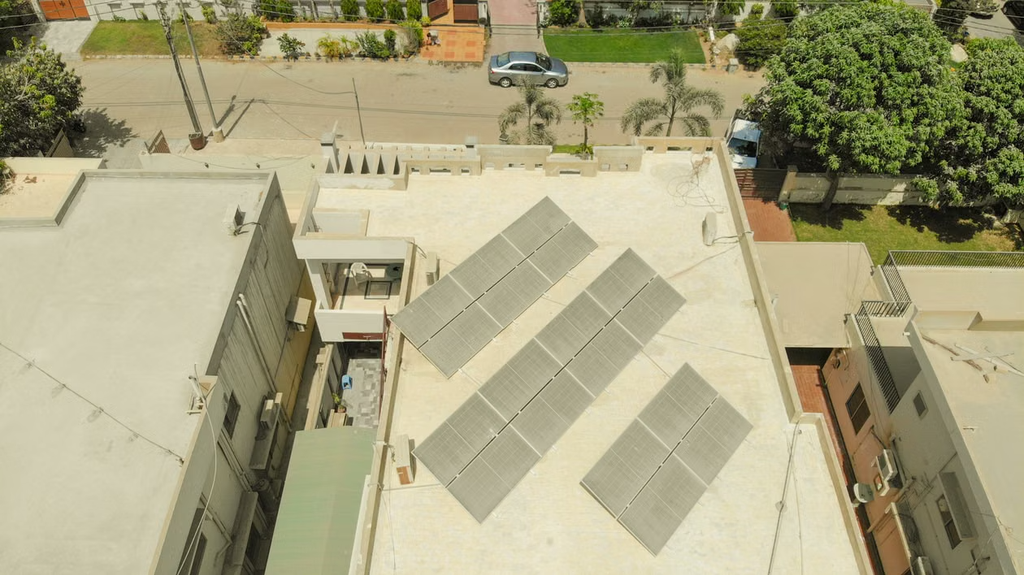
An FRP solar structure can be configured around planned service corridors when the system is properly engineered. Roof entry points, drains, tanks, inverter locations, and panel rows can be mapped before fabrication instead of finding walking space afterward.
The frame must still be designed for loads, anchoring, bracing, module dimensions, and installation method. An FRP solar structure is most useful when mounting and future access are planned together.
Walkways Should Be Decided Before Panel Rows
During solar panel installation, spacing is often considered mainly for layout and shading. Serviceability should be considered at the same stage.
If maintenance routes are left until the end, workers may later need to remove modules or modify frame members. Planned solar maintenance access reduces that risk by defining where technicians and service equipment can move before the array is completed.
Pakistan’s Solar Growth Raises the Maintenance Question
Pakistan’s rooftop solar sector has expanded rapidly. Economic Survey 2025-26 figures reported that solar net metering had added 7,319 MW of installed capacity by 2026. That expanding base means more rooftop systems will eventually need inspection, cleaning, repairs, structural checks, and component replacement.
As solar adoption grows, Karachi solar service access becomes more important because today’s layout determines how easily tomorrow’s servicing can be performed.
Installation planning also needs to account for future maintenance requirements. LONGi’s installation and maintenance resources cover mechanical installation, electrical installation, inspection, cleaning, and ongoing module maintenance, reinforcing why servicing should be considered from the beginning of a PV project.
Cleaning Access Should Influence Structure Design
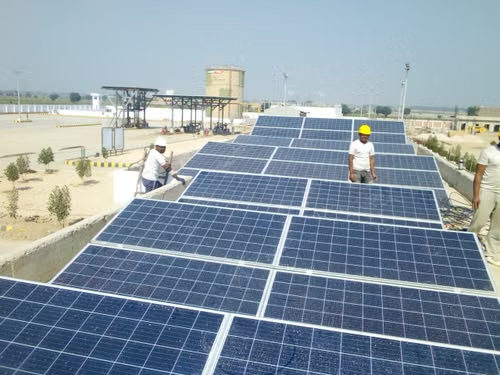
Cleaning is easier when workers can reach panel rows from controlled positions. Without adequate space, technicians may be forced to stretch across modules or place equipment on unsuitable surfaces.
An FRP solar structure should therefore be planned with realistic working access where roof size and engineering requirements allow. Effective solar maintenance access can support cleaning, visible wiring checks, clamp inspection, and panel replacement.
This is why solar panel installation should consider more than how many modules fit on a roof. The layout should account for how those modules will be reached throughout the system’s operating life.
Panel Pro Connects Installation with Future Servicing
Panel Pro provides FRP solar structures, panel installation, professional cleaning, solar inspections, performance testing, preventive maintenance, and O&M services. Combining these activities allows a rooftop to be considered from both installation and maintenance perspectives.
During solar panel installation, service paths can be considered alongside panel rows and structure placement. Later, those routes support inspection, cleaning, and component access. A properly planned FRP solar structure therefore contributes to both mounting and future servicing.
Why Access Planning Matters Long Term
A good rooftop layout should identify panel footprints, structure dimensions, safe entry routes, drainage points, wiring paths, and equipment clearances. This supports Karachi solar service access throughout the system’s life.
There is no single walkway dimension suitable for every project. The exact route should reflect the roof, system size, applicable standards, equipment arrangement, and engineering requirements.
Proper solar maintenance access can make future work less disruptive, while careful solar panel installation can avoid obstacles that later require partial dismantling. FThere is no universal width. Required space depends on roof layout, system design, applicable standards, service requirements, and safety considerations.or Karachi property owners, the aim should be a rooftop solar system that can be safely reached, inspected, cleaned, repaired, and managed for years rather than a layout focused only on fitting the maximum possible number of panels.
FAQs
There is no universal width. Required space depends on roof layout, system design, applicable standards, service requirements, and safety considerations.
Planning access early can make future cleaning, inspection, and component checks easier while reducing unnecessary panel removal.
Yes. A properly engineered FRP solar structure can be planned around designated service paths while still meeting structural and mounting requirements.
No. Generation capacity should be balanced with structural requirements, drainage, equipment clearance, safe servicing routes, and long-term maintenance needs.